
Course Code: PCCST205 Course Objectives: 1. To equip students with the ability to analyze and solve problems using discrete mathematical techniques. 2. To give a deeper understanding of mathematical logic, set theory, and proof techniques such as direct proofs, proof by contradiction, and mathematical induction. SYLLABUS Sets, Functions, and Relations Sets and Subsets, Venn Diagrams, Set Operations, Set Identities, Generalized […]

Compiler design is the process of creating a compiler, which is a specialized program that translates high-level programming language code (like C, Java, or Python) into machine code or intermediate code that can be executed by a computer. The process involves several stages, each with its own unique tasks and goals.

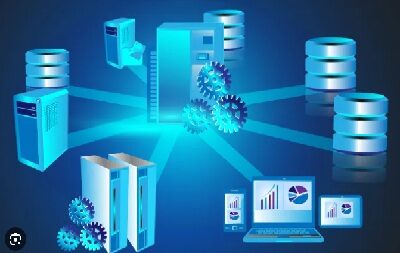
Database Management Systems (DBMS) are software systems that provide an interface to interact with and manage databases. These systems handle the storage, retrieval, and management of data, ensuring that data is stored efficiently and securely, and is available when needed. DBMSs are crucial in modern software applications, especially in handling large amounts of structured data.
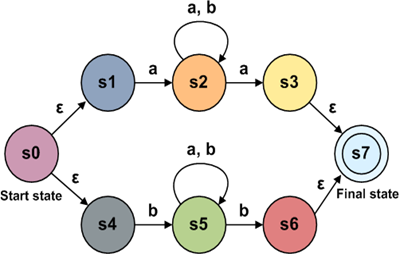
Formal Languages and Automata Theory is a foundational subject in computer science that explores how machines (automata) process and recognize patterns or strings formed using formal languages. This theory forms the basis of compiler design, language processing, and complexity theory.
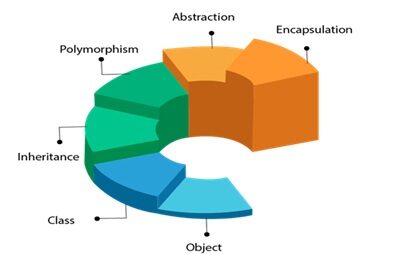
Course Objectives: 1. To teach the core object-oriented principles such as abstraction, encapsulation, inheritance, and polymorphism, robust error-handling using exception mechanisms to ensure program reliability. 2. To equip the learner to develop object oriented programs encompassing fundamental structures, environments, and the effective utilization of data types, arrays, strings, operators, and control statements for program flow in Java. 3. To enable […]

Course Code: GAPHT121 Course Name: Physics for Information Science Course prerequisite: None Course Objectives: To provide students a solid background in the fundamentals of Physics and to impart that knowledge in information science disciplines. The course is designed to develop scientific attitudes and enable the students to correlate the concepts of Physics with the core To make the students gain […]

Course Outcomes At the end of the course students will be able to CO1: Understand the concept, properties and important models of discrete random variables and using them, analyse suitable random phenomena. CO2: Understand the concept, properties and important models of continuous random variables and using them, analyse suitable random phenomena. CO3: Analyse random processes using autocorrelation, power spectrum and […]

Objective – The course aims to equip the students to take industrial decisions and to create awareness of economic environment. Expected Outcomes The students are able to explain the fundamental concepts of economics like scarcity, basic economic problems, demand, supply, consumer surplus and taxation and understand its applications in the real world. The students should have a knowledge of production, […]

Course Code: GYMAT101 Course Name: ENGINEERING MATHEMATICS Course Prerequisite: Basic knowledge in single variable calculus and matrix operations. Course Objectives: 1. To provide a comprehensive understanding and basic techniques of matrix theory to analyze linear systems. 2. To offer advanced knowledge and practical skills in solving second-order ordinary differential equations, applying Laplace transforms, and understanding Fourier series, enabling students to […]

Course code: MET458 Course name: Advanced Energy Engineering Course Pre / Co-requisite: Nil Course Objectives: a) To give an idea about global energy scenario and conventional energy sources. b) To understand solar, wind and Biomass energy. c) To know concepts of other renewable energy sources. d) To create awareness on the impacts of energy conversion and importance of sustainable energy […]

Description This course provides a comprehensive introduction to blockchain technology, exploring its underlying principles, architecture, and potential applications. Students will learn how blockchain works, including key concepts such as consensus mechanisms, cryptography, and smart contracts. The course will also cover the different types of blockchains (public, private, and consortium) and their various use cases across industries like finance, supply chain […]

This course provides the knowledge about various types of estimation and specification of different civil engineering works. It equips students to analyze the rate of various items of work with reference to the standard data and schedule of rate. This course develops capability of students to prepare the detailed estimate of various items of work related to civil engineering construction […]

Course Objectives Goal of this course is to expose the students to the fundamental concepts of climate, its influencing factors, climate change and its relationship with sustainability. After this course, students will be able to recognize the real-world problems that can happen due to climate change, aware of the various mitigation and adaptation techniques using sustainable technologies for combating the […]
This course will help you to dive deep into the fundamentals of Digital Image Processing, Image Enhancement, Image Restoration. From basic algorithms to advanced image filtering methods, this course equips you with the skills to manipulate and extract valuable information from digital images with precision and efficiency using Matlab. Join us to unleash the power of pixels and transform your […]

Computer Organization and Architecture CST 202 or COA course is designed to help learners with the ability to understand the basic structure of digital computers. It is introduced by KTU in 2019 It is essential to study computer systems and architecture to understand the hardware behind the code and its function at the physical level by interacting with computer memory and I/O […]